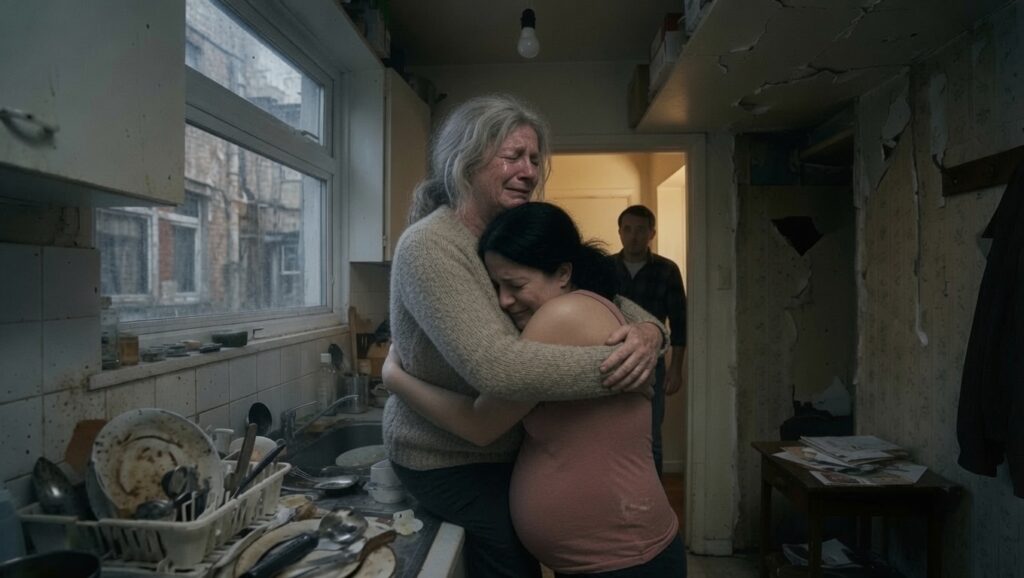
I didn’t walk into the kitchen right away. I stood there in the hallway, watching the woman I loved slowly disappear under the weight of expectations I had never questioned. The sink was full, the counter cluttered, leftovers from a dinner where she had barely eaten because she was too busy serving everyone else. My mother had complained the roast was dry. My sister Jessica said the potatoes lacked seasoning. Chloe joked—loud enough for Lucy to hear—that “pregnancy must be making her lazy.” And I… I laughed. God help me, I laughed.
That’s the part that haunts me most. Not the shouting. Not the tension. But the quiet betrayal of choosing comfort over courage. Lucy never defended herself. She just nodded, smiled faintly, and kept moving, like she had accepted a role she never auditioned for.
When I finally stepped into the kitchen, she flinched slightly, like she expected criticism instead of concern. That alone made my chest tighten. This wasn’t just exhaustion. This was conditioning.
“Lucy,” I said softly.
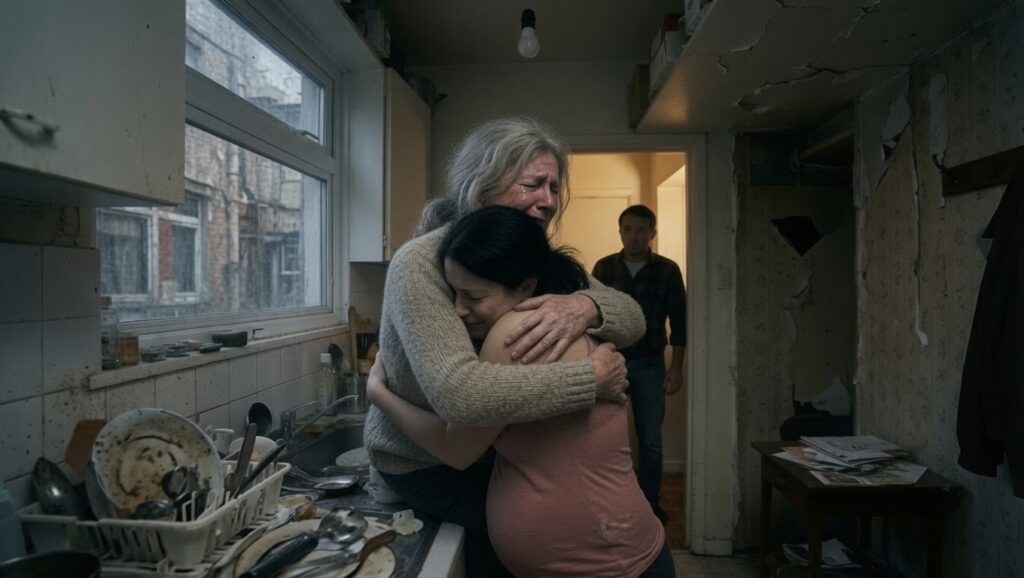
She turned, forcing a smile that didn’t reach her eyes. “I’m almost done.”
That sentence—I’m almost done—hit harder than anything else. Because she wasn’t talking about the dishes.
I walked over, took the sponge from her hand, and set it down. Her fingers were wrinkled, red from the cold water. “You shouldn’t be doing this,” I said.
“It’s fine,” she replied quickly. “Your mom likes the kitchen clean before morning.”
There it was. Not I want to. Not it needs to be done. But your mom likes.
For the first time in my life, I heard how wrong that sounded.
I looked at her—really looked at her. The slight swelling in her ankles. The way she shifted her weight to ease the pressure on her back. The dark circles under her eyes. And then I looked at her stomach, where our child moved gently beneath her skin, completely dependent on a mother who hadn’t been allowed to rest.
And suddenly, all those years of letting others “lead” didn’t feel like family anymore. It felt like cowardice.
“Go sit down,” I told her.
She hesitated. Not because she didn’t want to—but because she didn’t believe she was allowed to.
“I’ll handle this.”
“You’ll get in trouble,” she whispered.
That broke something in me completely. My wife—eight months pregnant—was afraid of getting in trouble in her own home.
I didn’t argue. I didn’t reassure. I just reached into my pocket, pulled out my phone… and made the call.
At first, she didn’t understand who I was calling. But when I said, “Yes, I need to report a situation involving a pregnant woman under sustained emotional and physical strain in a shared household,” her eyes widened.
“David… what are you doing?”
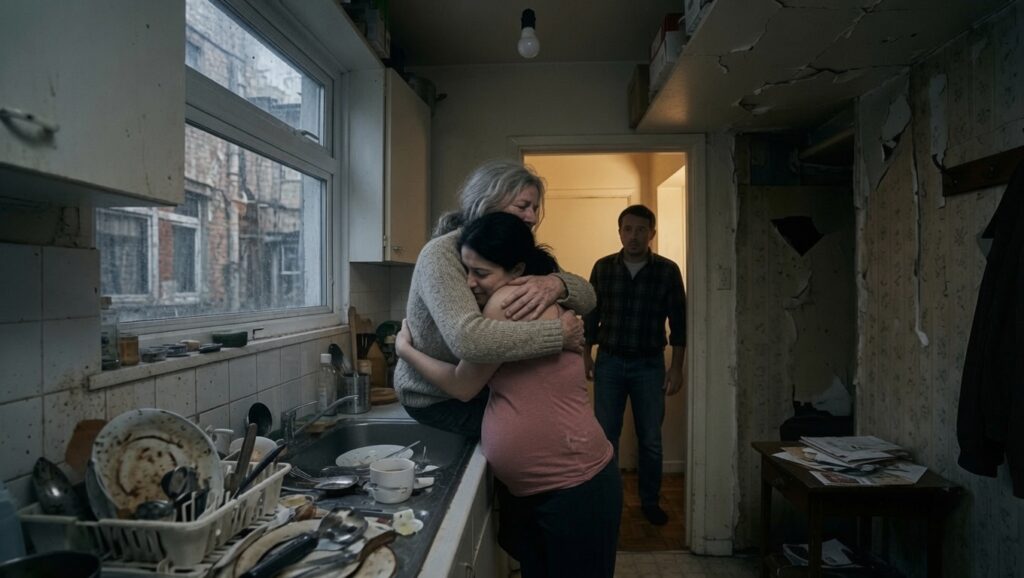
I met her gaze, steady for the first time in years. “Fixing what I should’ve fixed a long time ago.”
Within twenty minutes, the house that had always felt untouchable—controlled—began to shift. My mother came downstairs first, irritated, demanding to know why strangers were at her door. Then my sisters followed, confusion quickly turning into anger when they realized this wasn’t a misunderstanding.
It was exposure.
Questions were asked. Not gentle ones. Direct ones. About Lucy’s workload. Her rest. Her treatment. About who made decisions—and who didn’t.
For the first time, the power in that house didn’t belong to the loudest voice in the room. It belonged to the truth.
And the truth didn’t sound like shouting. It sounded like Lucy’s quiet voice finally answering honestly when someone asked, “Are you being taken care of here?”
She didn’t cry. She didn’t accuse. She just said, “No.”
One word.
That was all it took.
The silence that followed was heavier than any argument we’d ever had in that house. My mother looked at me like she didn’t recognize her own son. My sisters were furious—accusing me of betrayal, of overreacting, of “airing family business.”
But for the first time in my life, their approval didn’t matter.
Because I had finally chosen the right person to stand beside.
Lucy.
That night didn’t fix everything. It didn’t magically undo years of habits and control. But it drew a line—clear, undeniable. And once that line was drawn, there was no going back.
Some people think the most dangerous damage comes from obvious cruelty.
It doesn’t.
It comes from the quiet moments when someone is suffering right in front of you… and you choose not to see it.
I made that mistake for far too long.
But not anymore.